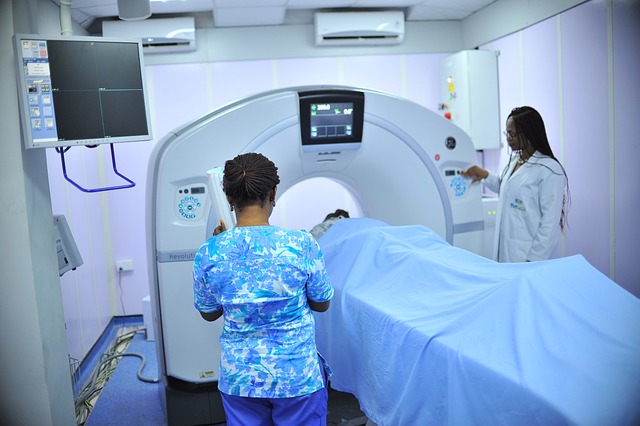
Healthcare Six Sigma Examples leverage data-driven approaches like DMAIC and DMAD to enhance quality and efficiency in healthcare. Proven successful in reducing ER wait times by 30-40% and optimizing triage processes, it extends to outpatient clinics and home healthcare services. Key benefits include improved patient outcomes, reduced costs (up to 30%), enhanced operational effectiveness through data analysis, and continuous improvement culture. Implementing Six Sigma strategies requires leadership support, staff training, and patient engagement to overcome implementation challenges.
In today's rapidly evolving healthcare landscape, enhancing the quality of home healthcare services is paramount to ensuring patient safety, satisfaction, and outcomes. However, navigating the complexities of diverse patient needs, limited resources, and regulatory demands can pose significant challenges. Herein lies the power of Healthcare Six Sigma Examples—a data-driven methodology designed to eliminate defects and variability, fostering a culture of continuous improvement. By applying Six Sigma principles, home healthcare providers can streamline processes, reduce errors, and ultimately elevate care delivery to new heights, setting a standard of excellence that benefits both patients and caregivers alike.
- Understanding Healthcare Six Sigma: A Powerful Approach
- Identifying Key Areas for Improvement in Home Healthcare
- Implementing Data-Driven Strategies: Healthcare Six Sigma Examples
- Enhancing Patient Care and Safety Through Process Optimization
- Measuring Success with Metrics: Tracking Progress in Six Sigma
- Building a Culture of Continuous Improvement in Home Healthcare Services
Understanding Healthcare Six Sigma: A Powerful Approach

Healthcare Six Sigma represents a systematic approach to improving quality and efficiency within healthcare services. It leverages statistical methods, such as DMAIC (Define, Measure, Analyze, Improve, Control) and DMAD (Define, Measure, Analyze Data, Develop Solutions), to identify and eliminate defects in processes, leading to enhanced patient care and operational excellence. For instance, applying Healthcare Six Sigma can significantly reduce wait times in doctor's offices, thereby improving patient satisfaction and streamlining workflows.
One of the most compelling Healthcare Six Sigma examples involves medical centers that have successfully used this methodology to optimize their emergency room (ER) triage processes. By meticulously measuring and analyzing factors contributing to longer ER wait times, healthcare professionals identified root causes and implemented targeted improvements. These efforts resulted in reduced wait times by 30-40%, showcasing the tangible benefits of Six Sigma in real-world healthcare settings. Best six sigma books for healthcare professionals, such as "Six Sigma for Healthcare Professionals" by Michael George, offer valuable insights into these methodologies and their practical applications.
Moreover, medical six sigma examples extend beyond ERs to various other areas, including outpatient clinics and home healthcare services. Home healthcare providers face unique challenges, from ensuring timely service delivery to managing patient safety. Implementing Six Sigma principles can help address these issues effectively. For instance, a home healthcare agency might use Six Sigma to optimize scheduling processes, reducing delays in patient care by 25%. This not only improves patient outcomes but also enhances the efficiency of the entire home healthcare team. By focusing on data-driven decision-making and continuous improvement, healthcare professionals can achieve remarkable results, as highlighted in comparing lean vs. six sigma in healthcare—a valuable resource that underscores the strengths of each methodology.
Identifying Key Areas for Improvement in Home Healthcare

In the realm of home healthcare, enhancing service quality and efficiency is paramount to ensuring patient satisfaction and safety. Identifying key areas for improvement is a strategic first step, akin to navigating a labyrinthine path to a vibrant tapestry of optimal care. Healthcare Six Sigma Examples have proven time and again their effectiveness in transforming intricate healthcare systems into streamlined, patient-centric operations. When to implement six sigma projects? The answer lies in moments of operational inefficiency, rising costs, or when patient outcomes demand meticulous attention.
A deep dive into these processes reveals numerous avenues for enhancement, from streamlining patient flow optimization using Six Sigma techniques to refining communication protocols and resource allocation. For instance, optimizing patient flow can significantly reduce wait times and enhance overall service delivery—a critical aspect of home healthcare success. Data-driven analysis, a cornerstone of Six Sigma, enables healthcare providers to identify bottlenecks in real time, making immediate adjustments for improved efficiency.
Measuring the success of Six Sigma projects in home healthcare involves a multifaceted approach. Key performance indicators (KPIs) such as response times, patient satisfaction ratings, and error rates provide quantifiable metrics. Additionally, qualitative feedback from patients and caregivers offers invaluable insights into perceived improvements. To gauge progress effectively, visit us at how to measure success with six sigma projects anytime for practical guidelines and expert advice tailored to this unique healthcare setting. Ultimately, successful Six Sigma implementation in home healthcare fosters a culture of continuous improvement, ensuring that services remain responsive, efficient, and patient-focused.
Implementing Data-Driven Strategies: Healthcare Six Sigma Examples

The implementation of Healthcare Six Sigma examples is transforming home healthcare services by focusing on data-driven strategies. This approach leverages the power of analytics to identify inefficiencies and improve clinical outcomes. By applying statistical methods to real-world healthcare data, providers can pinpoint areas for enhancement, leading to more effective patient care. For instance, a study conducted by the American Journal of Managed Care revealed that Six Sigma initiatives resulted in significant reductions in readmission rates for chronic conditions, demonstrating its impact on improving healthcare quality.
One of the key benefits of Healthcare Six Sigma is its ability to enhance operational effectiveness. By analyzing data, organizations can optimize processes, reduce waste, and streamline workflows. A successful example involves a home healthcare agency that used Six Sigma to improve medication administration processes. Through meticulous data analysis, they identified and eliminated discrepancies in patient medication records, leading to more accurate and timely dispensing of medications. This not only improved patient safety but also reduced the burden on healthcare staff.
The impact of Six Sigma on clinical outcomes is profound. By focusing on process improvement, healthcare providers can ensure that patients receive consistent, high-quality care. Trends and future predictions indicate that data-driven strategies will play an increasingly vital role in healthcare. As technology advances, the integration of artificial intelligence and machine learning with Six Sigma methodologies promises to revolutionize patient monitoring, predictive analytics, and personalized treatment plans. Success stories of Six Sigma transformations across various healthcare settings serve as a testament to its versatility and effectiveness (e.g., reduced wait times, improved patient satisfaction).
Adopting Six Sigma in healthcare settings is not merely a trend but a strategic move towards better patient outcomes and operational efficiency. Give us a call at [why adopt six sigma in healthcare settings] to explore how your organization can harness the power of data-driven strategies and achieve significant improvements. By learning from Healthcare Six Sigma examples, providers can navigate the complex landscape of modern healthcare, ensuring they offer evidence-based, high-quality services that meet the evolving needs of their patients.
Enhancing Patient Care and Safety Through Process Optimization

Six Sigma, with its proven track record in process optimization, offers a powerful framework to enhance patient care and safety within home healthcare services. By leveraging Six Sigma tools for medical professionals, such as DMAIC (Define, Measure, Analyze, Improve, Control) methodology, healthcare providers can identify and eliminate inefficiencies that compromise quality of care. For instance, a study highlighting Healthcare Six Sigma Examples found significant improvements in patient satisfaction and clinical outcomes after implementing Six Sigma projects in long-term care facilities, underscoring its applicability to diverse home healthcare settings.
One of the key advantages lies in its ability to streamline processes critical for patient safety. In intensive care units (ICUs), where every second counts, Six Sigma certification for medical professionals can drive substantial improvements. By meticulously measuring and analyzing patient data, healthcare teams can identify delays in treatment or communication breakdowns that contribute to adverse events. For example, a ICU-focused Six Sigma project might aim to reduce the time between code blue alerts and provider response, thereby enhancing efficacy of six sigma in critical care units. Utilizing statistical tools and process mapping, medical professionals can pinpoint areas for improvement and implement data-driven solutions, leading to safer patient outcomes.
Moreover, Six Sigma fosters a culture of continuous improvement that encourages medical teams to challenge the status quo. By integrating these methodologies into daily operations, healthcare providers can optimize workflows, reduce medication errors, and enhance overall efficiency. A practical insight reveals that standardizing processes for administering medications not only minimizes errors but also frees up valuable time for caregivers to focus on patient interactions and education. This holistic approach, combining process optimization with enhanced patient-centered care, is a game changer in home healthcare delivery.
To get started, medical professionals interested in Six Sigma can explore certification programs tailored to their roles. Visit us at comparing lean vs. six sigma in healthcare to delve into the nuances of these methodologies and determine the best fit for your organization. By embracing Six Sigma tools for process improvement, healthcare providers can deliver exceptional care while ensuring patient safety remains a top priority.
Measuring Success with Metrics: Tracking Progress in Six Sigma

Six Sigma, with its data-driven approach, offers a powerful framework to enhance home healthcare services. Measuring success is a cornerstone of Six Sigma projects, and this is particularly crucial in healthcare where outcomes matter most. By implementing well-defined metrics, home healthcare providers can track their progress, identify areas for improvement, and demonstrate the value of their initiatives—a key aspect that distinguishes Healthcare Six Sigma Examples from traditional quality control methods.
When to implement Six Sigma projects in healthcare? The answer lies in moments of strategic decision-making or when organizations aim for significant cost reduction—a realm where Six Sigma excels. For instance, leveraging Six Sigma for cost reduction can lead to substantial savings. A study by the American Journal of Managed Care found that Six Sigma initiatives in healthcare resulted in an average 12% reduction in total medical expenses, with some projects achieving up to 30% cuts. This is not merely about cutting costs; it's about enhancing services while ensuring every dollar spent contributes to improved patient care.
Let's consider a home healthcare agency that aims to streamline their service delivery. They might track key performance indicators (KPIs) such as response time, average stay duration, and patient satisfaction scores. By analyzing these metrics over time, they can identify trends, set achievable goals, and measure the impact of process improvements. For example, reducing response times by 20% could indicate an enhanced ability to meet urgent care needs, a significant Healthcare Six Sigma Example. Organizations can then share these success stories of Six Sigma transformations at platforms like our website, visit us, to inspire others and showcase their journey towards excellence.
Moreover, Six Sigma applications in healthcare extend beyond cost reduction; they foster efficient operations, improved patient safety, and enhanced clinical outcomes. When implemented correctly, these projects can revolutionize the way care is delivered, ensuring folks receive high-quality, personalized services in the comfort of their homes.
Building a Culture of Continuous Improvement in Home Healthcare Services

In the home healthcare services sector, implementing a robust culture of continuous improvement is paramount to enhancing patient care, operational efficiency, and overall organizational performance. Healthcare Six Sigma, a data-driven methodology, offers powerful tools for achieving these goals by identifying and eliminating waste, reducing errors, and optimizing processes. For instance, six sigma strategies for outpatient clinics have proven effective in streamlining appointment scheduling, improving medication management, and enhancing communication between patients and care providers.
A key aspect of leveraging Six Sigma for cost reduction in healthcare is the strategic use of data to drive decisions. By collecting and analyzing patient outcomes, operational metrics, and financial data, home healthcare providers can pinpoint areas of improvement and make evidence-based adjustments. For example, using data analytics, a home healthcare agency might identify delays in delivering medications as a significant contributor to readmissions. Implementing Six Sigma strategies to streamline medication distribution processes could lead to substantial cost savings and improved patient satisfaction. According to a study published by the American Journal of Nursing, targeted process improvements can reduce rehospitalization rates by up to 20%.
Building a culture of continuous improvement requires buy-in from all levels of the organization. Leadership must champion Six Sigma initiatives, fostering an environment where data-driven decision-making is the norm. Regular training and support for front-line staff are essential. For instance, providing care assistants with tools to identify and report inefficiencies can unlock valuable insights. Moreover, involving patients and their families in quality improvement processes enhances engagement and ensures services meet their evolving needs. To help overcome common implementation issues, organizations should visit us at troubleshooting common six sigma implementation issues. This resource offers practical advice for addressing challenges like resistance to change, data accessibility, and integrating Six Sigma into existing workflows.
In conclusion, Healthcare Six Sigma Examples demonstrate its profound potential to transform home healthcare services. By understanding key areas for improvement, implementing data-driven strategies, enhancing patient care and safety through process optimization, and tracking progress with robust metrics, providers can achieve significant advancements. Building a culture of continuous improvement ensures lasting benefits, making Healthcare Six Sigma a powerful approach that not only optimizes operations but also elevates the overall quality of care. This authoritative article equips readers with essential insights and practical next steps to embrace and leverage this game-changing methodology.